Live Dealer vs RNG Teen Patti Real Cash Tables, Teen Patti Real Cash
Live Dealer vs RNG Teen Patti Real Cash Tables explained for teen patti real cash: step-by-step, with the details most guides leave out.
What is Live Dealer vs RNG Teen Patti Real Cash Tables?
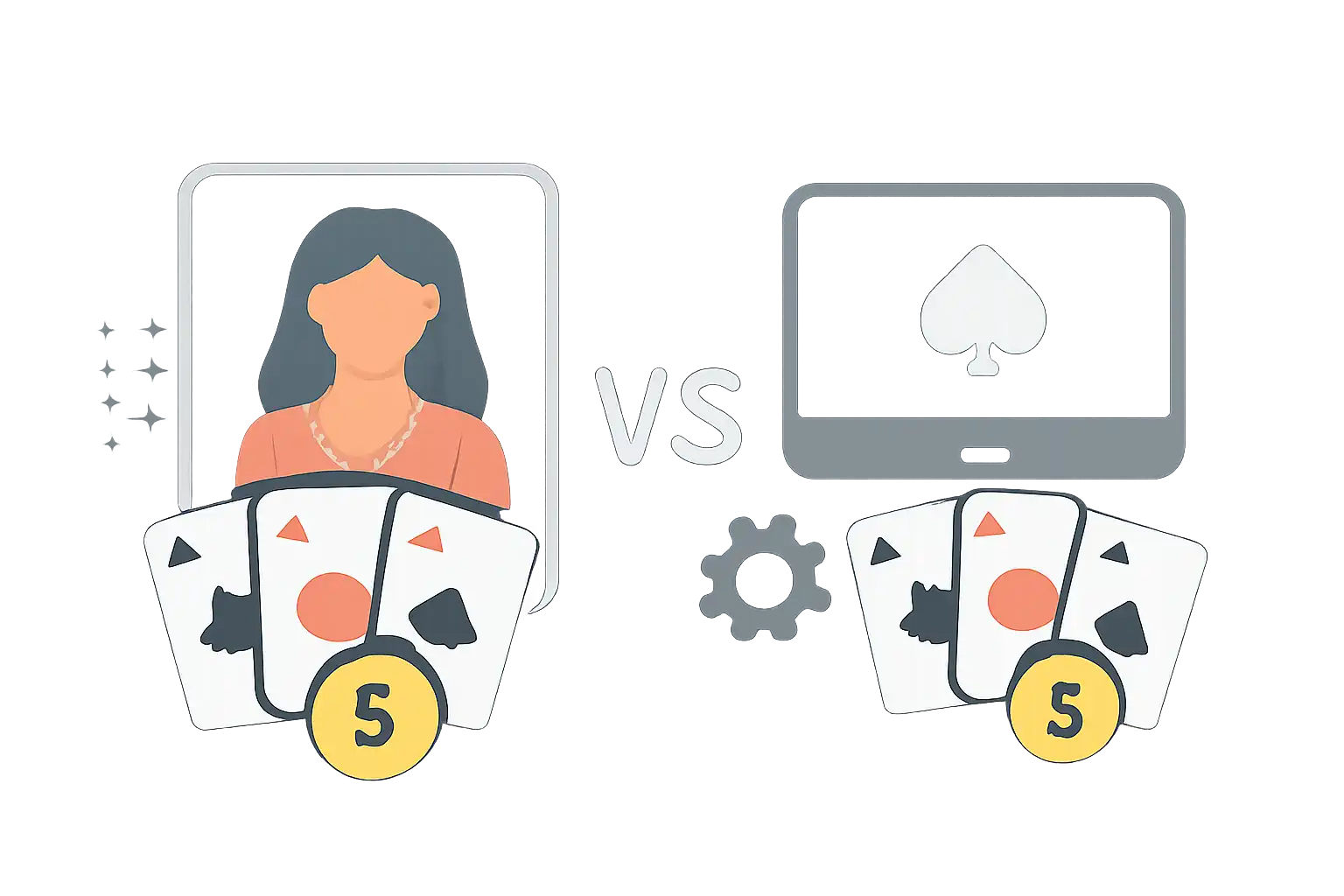
Teen Patti Real Cash is available in two distinct formats at online casinos: Live Dealer tables and RNG (Random Number Generator) tables. Both let you wager real money on the classic three-card Indian card game, but the technology behind each format, and the experience it creates, is fundamentally different. Understanding the distinction is the single most important decision you will make as a real-money player, because it shapes everything from game speed and atmosphere to the trust model you rely on for fair play.
Live Dealer Teen Patti Real Cash
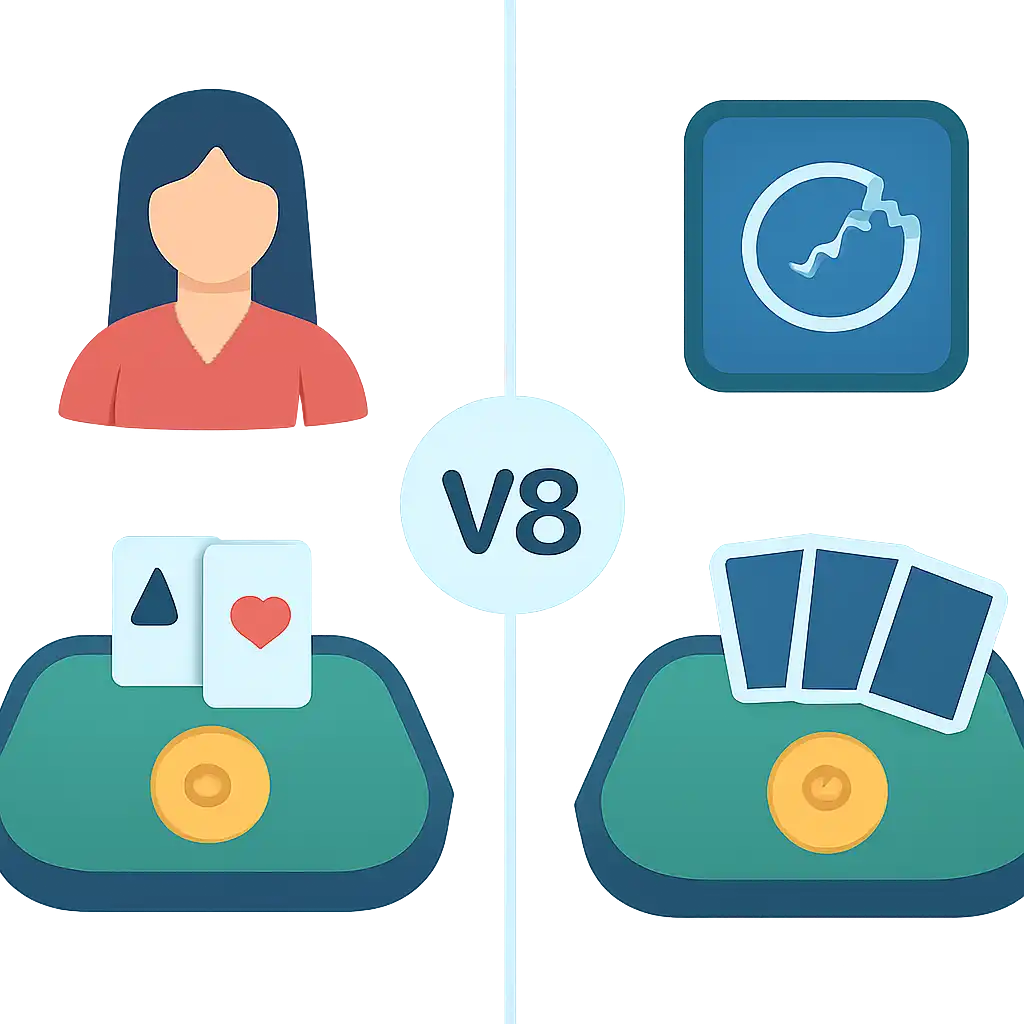
Live Dealer tables stream a real physical card game from a studio or land-based casino floor directly to your device via high-definition video. A professionally trained human dealer shuffles a genuine deck, places the cards face-up on a green felt surface, and announces each outcome aloud. You watch every action unfold in real time. Bets are placed through an on-screen interface, and the dealer manually reports the cards dealt so the system can calculate and settle winnings. Some tables include a live chat window so players can interact with the dealer and other participants, recreating much of the social atmosphere of a physical Teen Patti session.
RNG Teen Patti Real Cash
RNG tables replace the human dealer and physical cards entirely with certified software. When you click Deal, a complex algorithm, audited and certified by independent testing laboratories such as eCOGRA, iTech Labs, or BMM Testlabs, generates an outcome that is statistically equivalent to drawing from a freshly shuffled physical deck. The result appears on screen instantly, with no video stream, no waiting for a dealer, and no set schedule. RNG games are available twenty-four hours a day, progress at whatever pace you choose, and are ideal for players who want to practise strategy without the time pressure of a live environment.
Why the distinction matters for real-cash players
Because real money is at stake, knowing which format you are playing determines which fairness guarantee applies, what minimum and maximum bets are available, how quickly rounds complete, and whether a human dealer's judgment, or a certified algorithm, is settling each hand. Neither format is inherently superior; the right choice depends on your priorities as a player. This guide covers every dimension of that choice in full detail.
Common Live Dealer vs RNG Teen Patti Real Cash Tables questions
Is the live dealer game actually fair?
Yes, provided you play at a platform holding a valid licence from a recognised gambling authority such as the Malta Gaming Authority (MGA), the UK Gambling Commission (UKGC), or Curaçao eGaming. Licensed operators are required to use regulation-approved card shuffling procedures, and live studio feeds are monitored by the licensing body. The physical cards are the randomisation mechanism, and the dealer's actions are recorded on video, creating an auditable record that RNG software alone cannot match in the same way.
Is the RNG game rigged?
Certified RNG software is not rigged. Independent testing houses verify that the algorithm produces outcomes that are statistically indistinguishable from a randomly shuffled deck. Each licensed operator publishes its certification or lists its testing provider in the footer of its site. You can look up the certification status of any testing laboratory, eCOGRA publishes its approved-operator list at ecogra.org, and iTech Labs maintains its records at itechlabs.com, so you can verify independently before you deposit.
Which format has better odds?
The house edge in Teen Patti is determined by the game rules and the paytable, not by whether a human or software deals the cards. A Live Dealer table and an RNG table running the same rule set will offer the same theoretical Return to Player (RTP). Where they can differ is in side-bet availability: Live Dealer lobbies often carry more side-bet variations, each with its own house edge, so comparing paytables carefully before you sit down is worthwhile.
Can I play Teen Patti Real Cash on mobile?
Both formats are supported on modern smartphones and tablets. RNG games are lightweight and typically run without issue on any device with a current browser. Live Dealer streams require a stable internet connection, a minimum of around 5 Mbps is generally recommended for smooth HD video, so mobile players on slower connections may prefer RNG tables to avoid buffering interruptions.
Are stakes different between formats?
Almost always, yes. Live Dealer tables carry higher minimum bets, commonly between ₹100 and ₹500 per hand at mainstream platforms, because studio overhead, dealer salaries, and streaming infrastructure add to operating costs. RNG tables frequently begin at ₹10 or less per hand, making them more accessible for players building their bankroll or learning the game. Maximum bets on live tables can run into lakhs of rupees on VIP tables, while RNG maximums vary by operator.
Does the format affect withdrawal speed?
The table format itself has no effect on withdrawal processing time. Withdrawal speed is determined by the payment method you choose, your platform's KYC verification status, and the operator's internal processing schedule. UPI and e-wallet withdrawals at reputable platforms typically complete within a few hours once verification is cleared; bank transfers may take one to three business days.

Live Dealer vs RNG Teen Patti Real Cash Tables for new players
Start with RNG to learn the rules without pressure
If you are new to Teen Patti Real Cash, RNG tables are the recommended starting point. Because there is no dealer waiting for your decision and no other players watching, you can take as long as you need to review the paytable, consult hand-ranking guides, and think through each bet before confirming it. Many platforms offer RNG Teen Patti in a free-play or demo mode, allowing you to experience the full game mechanics, including side bets and bonus rounds, without risking a single rupee.
What to look for when choosing your first table
When you are ready to move from demo play to real money, evaluate each table on the following criteria before sitting down:
- Minimum bet: Choose a table where the minimum is no more than one to two percent of your session bankroll so a losing streak does not force you off the table.
- Rule variant: Confirm whether the table uses Classic Teen Patti rules, AK47, Muflis, or another variant, and make sure you understand how hand rankings differ across variants before wagering.
- RTP disclosure: Reputable platforms publish the RTP or house edge for every game in the game information panel. Prefer tables that disclose this clearly.
- Side-bet clarity: Side bets often carry a higher house edge than the main game. Read each side-bet paytable individually before opting in.
- Licence badge: Confirm the operator holds a current licence from MGA, UKGC, or an equivalent authority. Licence details are normally found in the site footer.
When to graduate to Live Dealer
Once you are comfortable with the hand rankings, betting options, and bankroll management principles of Teen Patti, Live Dealer tables add a meaningful layer of engagement. The human dealer, real cards, and optional chat feature replicate the communal experience of playing with friends or at a physical table, an element that many Indian players consider central to the enjoyment of Teen Patti. Transition to Live Dealer when you can make betting decisions confidently within the countdown timer the table displays, which is typically between fifteen and thirty seconds per betting round.
Bonus eligibility differences
Pay close attention to bonus terms. Welcome bonuses and reload offers at most platforms contribute differently across formats. Live Dealer Teen Patti hands commonly contribute a smaller percentage toward wagering requirements than RNG hands, often ten to twenty percent versus one hundred percent, because live games have a lower house edge relative to many other casino games. Read the full bonus terms and conditions on your chosen platform before deciding which format to use when clearing a promotion.
Live Dealer vs RNG Teen Patti Real Cash Tables safety, fees, and timing
Safety and fairness standards
Both formats carry independent safety guarantees, but those guarantees come from different sources. For Live Dealer tables, fairness is anchored in the physical world: regulation-grade playing cards, shuffling procedures audited by the licensing authority, and a continuous video record of every hand. If a dispute arises, the casino's surveillance team can review the stream footage to confirm what cards were dealt.

For RNG tables, fairness rests on software certification. The certifying laboratory, eCOGRA, iTech Labs, BMM Testlabs, or similar, tests the algorithm for statistical randomness and confirms that the published RTP matches actual payouts over millions of simulated hands. Certificates are typically renewed annually and are available for inspection directly on the testing laboratory's own website. Players who want to verify a specific platform's RNG certificate should visit the testing laboratory's site and search the operator name in the approved-operator registry.
Platform fees and rake
Teen Patti Real Cash tables, whether live or RNG, do not typically charge an explicit fee per hand in the way poker rooms charge a rake. The platform's revenue comes from the mathematical house edge built into the paytable. However, some VIP Live Dealer tables operate on a commission model for certain side bets, deducting a small percentage from winning payouts. This commission structure, if applicable, is always disclosed in the game's paytable before you bet. There are no deposit fees at reputable platforms for domestic UPI transfers, though international card deposits may incur a currency conversion fee charged by your bank rather than the platform.
Timing: round duration and availability
RNG Teen Patti completes a hand in a matter of seconds. From the moment you confirm your bet to the moment winnings are credited, the entire cycle typically takes five to fifteen seconds, limited only by the platform's animation speed settings. Most RNG platforms allow you to disable animations entirely for maximum speed, making RNG an efficient format for high-volume practice sessions.
Live Dealer rounds take longer because a human dealer physically handles the cards and the game must wait for all seated players to place their bets before each hand begins. A typical Live Dealer Teen Patti round runs forty-five to ninety seconds from the opening of the betting window to the settlement of all wagers. Live tables operate on studio schedules and are most commonly available around the clock, though some providers rotate dealers on shift schedules that may briefly interrupt a specific table.
Responsible gambling controls
All licensed platforms are required to provide deposit limits, session time reminders, cooling- off periods, and self-exclusion tools regardless of which format you play. The speed of RNG play makes it particularly important to set a session time limit before you begin, as the rapid pace of hands can make it easy to lose track of time. If you need support, the National Responsible Gambling Trust of India and international organisations such as GamCare at gamcare.org.uk offer free, confidential guidance.
How Live Dealer vs RNG Teen Patti Real Cash Tables works
How Live Dealer Teen Patti works
A licensed game-studio operator, companies such as Evolution, Ezugi, Pragmatic Play Live, or Playtech, builds and staffs a purpose-built card studio equipped with professional lighting, multiple HD cameras, and a dedicated studio network. The dealer stands at a felt-covered table stocked with regulation playing cards. A video encoder captures the camera feeds and compresses them for internet transmission to thousands of simultaneous players.
On your device, the video arrives via an adaptive bitrate stream that adjusts quality automatically to your available bandwidth. An overlay interface displays your current balance, available bet spots, chip denominations, and a countdown timer. When the betting window opens, you select your chip value and tap or click the bet spot you want to activate. Once the timer expires, the dealer draws cards from the shoe, places them face-up, and announces the outcome. The platform's game server receives the hand result, entered by the dealer or captured by the studio's card-reading system, and calculates winning payouts, which are instantly credited to your account balance.
The video feed and the betting interface are synchronised so that what you see on screen matches the settled outcome. Chat messages you send appear on a monitor in the studio that the dealer can read between hands.
How RNG Teen Patti works
When you launch an RNG Teen Patti game, the platform loads a software client, either in your browser or via a downloaded app, that contains the game logic and a connection to the platform's RNG server. The RNG is a cryptographically secure pseudo-random number generator (CSPRNG), a type of algorithm that produces number sequences that pass rigorous statistical tests for randomness. Every time you press Deal, the server generates a fresh sequence of random numbers and maps them to specific cards in a 52-card deck, producing a unique hand outcome that is mathematically equivalent to drawing from a freshly shuffled physical deck.
The result is computed server-side and transmitted to your device in milliseconds, where the game's graphical engine animates the card draw and displays the outcome. Payout calculations are performed by the same server and your balance is updated in the same transaction. Because the entire process is software-driven, no camera, video stream, or human intervention is involved, and no outcome can be altered after you confirm your bet.
Provably fair and blockchain variants
A small number of platforms offer provably fair RNG Teen Patti, a format in which the cryptographic seed used to generate each hand's outcome is published to you before the hand begins and can be independently verified after it concludes. This approach, common in cryptocurrency casinos, allows any player to confirm mathematically that the result was not manipulated. Provably fair platforms explain their verification methodology in their help centre, and the verification itself is performed using publicly available cryptographic tools.
Live Dealer vs RNG Teen Patti Real Cash Tables step-by-step guide
Choosing and playing your first real-cash table
Follow these steps in order to move from choosing a platform to completing your first session confidently, regardless of which format you select.
- Select a licensed platform. Visit a platform that holds a current licence from the MGA, UKGC, or Curaçao eGaming authority. Confirm the licence number in the site footer and cross-reference it on the licensing authority's own public register, the MGA registry is at mga.org.mt and the UKGC register is at gamblingcommission.gov.uk.
- Create and verify your account. Register with your real name, date of birth, and a valid email address. Complete KYC verification, typically uploading a government-issued ID and a proof-of-address document, before you deposit, so your first withdrawal is not delayed by a verification hold.
- Set responsible gambling limits. Before making a deposit, navigate to the responsible gambling section of your account and set a daily or weekly deposit limit that reflects your entertainment budget. Also set a session time reminder if the platform offers one.
- Make your first deposit. Choose UPI, a domestic net banking option, or an e-wallet for the fastest processing and to avoid cross-border card fees. Confirm the minimum deposit amount on your chosen platform and deposit only what you are comfortable losing in the session.
- Play the RNG demo first. Before wagering real money, locate the RNG Teen Patti game in the casino lobby and open it in demo or practice mode if available. Play at least ten to fifteen hands to familiarise yourself with the interface, the bet spots, the side bets on offer, and the hand-ranking display.
- Compare the paytable before switching to real money. Open the game information or help panel, usually accessible via an "i" icon within the game, and read the paytable and RTP figure. Note which side bets are available and what their individual house edges are. Close any side bet you do not fully understand.
- Choose your format: RNG or Live Dealer. If you want speed, low minimum bets, and a pressure-free environment, select an RNG table. If you want social interaction, the visual confirmation of physical cards, and an atmosphere closer to playing in person, select a Live Dealer table. Confirm the table minimum before sitting.
- Select your chip denomination and place your bet. On either format, the chip tray displays denominations you can place on the main bet spot and any active side bets. Click or tap the chip denomination you want, then click or tap the bet spot. A bet counter will confirm the total amount you have placed before the round begins.
- For Live Dealer: monitor the countdown timer. The betting window is open for a fixed period displayed on screen, typically fifteen to thirty seconds. Confirm your bet before the timer reaches zero. After it closes, watch the dealer draw the cards and announce the result, any winning payouts are credited to your balance automatically after the hand is settled.
- For RNG: press Deal and review the outcome. Once you confirm your bet, press the Deal button. The software generates the hand instantly, animates the card reveal, and settles any winnings. Use the Rebet button to repeat the same stake, or adjust your chips before the next hand.
- Track your session balance, not individual hand results. Variance in Teen Patti is significant over short sessions. Set a stop-loss figure, for example, fifty percent of your session bankroll, and a take-profit target before you begin. If either limit is hit, end the session regardless of how recent hands have gone.
- Withdraw winnings promptly. Request a withdrawal to the same payment method you used to deposit. Most platforms process UPI withdrawals within two to four hours once KYC is complete. Keep a record of the withdrawal reference number provided by the platform in case you need to follow up with customer support.
Format comparison: what to look for at a glance
Use the criteria below to decide which format suits any given session. There is no universally correct answer, the right choice changes depending on your goals, your available time, and your current confidence level with the game.
- Pace of play: RNG is faster, ideal for short sessions or drilling a specific betting strategy. Live Dealer is slower, better when you want to enjoy the experience rather than maximise hands per hour.
- Minimum bet: RNG tables typically start lower, important if your session bankroll is modest. Live Dealer minimums are higher but offer the social experience in return.
- Fairness verification method: RNG fairness is verified by independent software certification, accessible on the testing laboratory's own website. Live Dealer fairness is anchored in physical cards and video records overseen by the licensing authority.
- Internet requirements: RNG works on any stable connection. Live Dealer requires a reliable connection of at least 5 Mbps for smooth HD video without buffering.
- Atmosphere: RNG is a solitary software experience with no dealer interaction. Live Dealer replicates the communal, social character of Teen Patti as it is played among friends or at a physical table.
- Bonus wagering contribution: RNG bets typically contribute more favourably toward clearing a bonus wagering requirement than Live Dealer bets. Always verify the exact contribution percentages in the platform's bonus terms before choosing a format to clear a promotion.
- Best for learners: RNG, because of its self-paced nature, demo-mode availability, and low minimum bets.
- Best for experienced players seeking authenticity: Live Dealer, because of its human element, physical cards, and multi-player environment.